

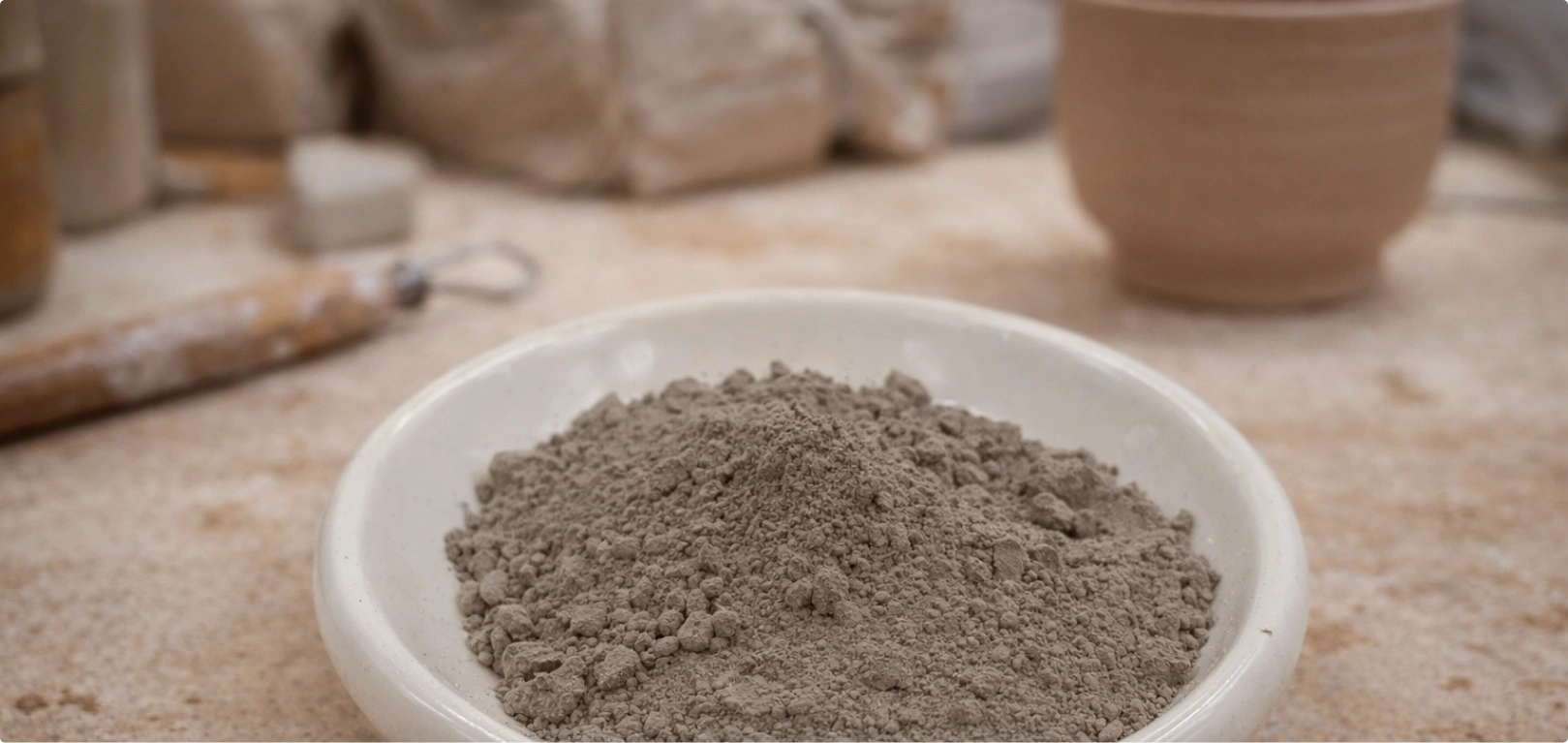
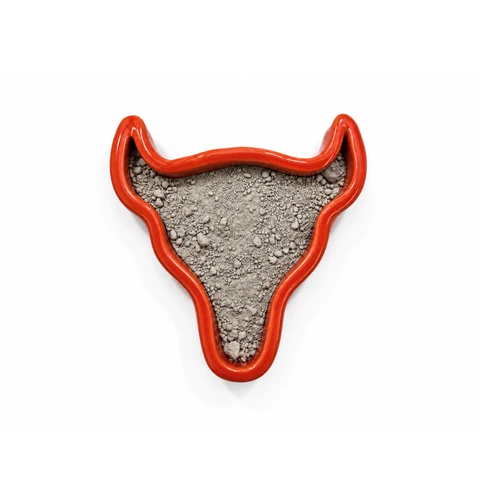
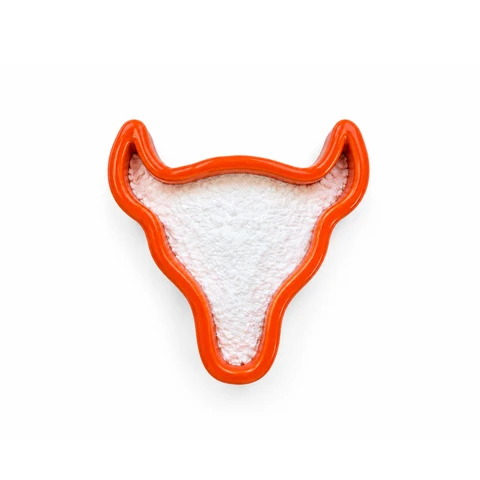
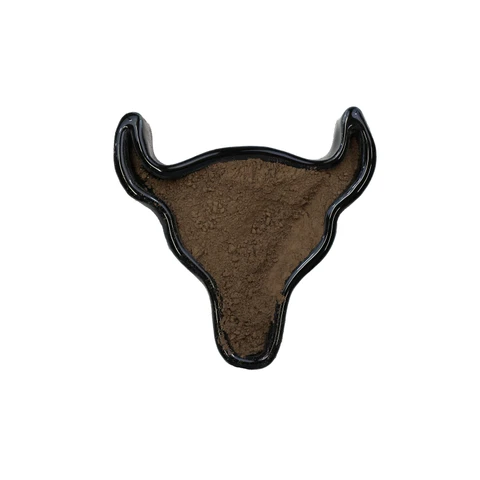
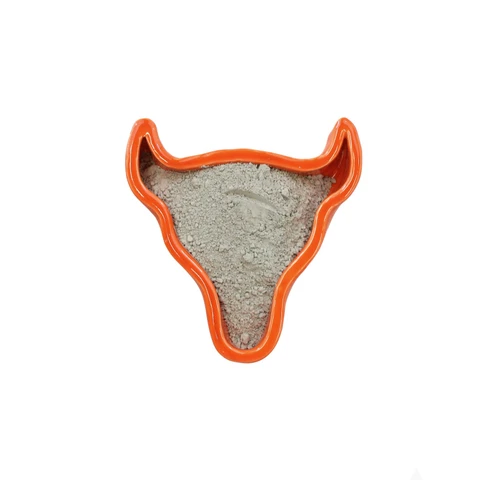
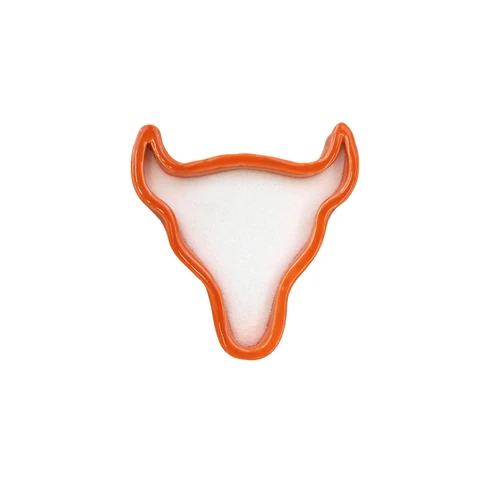
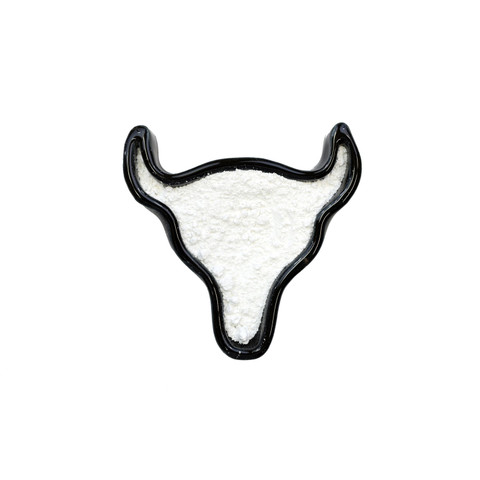
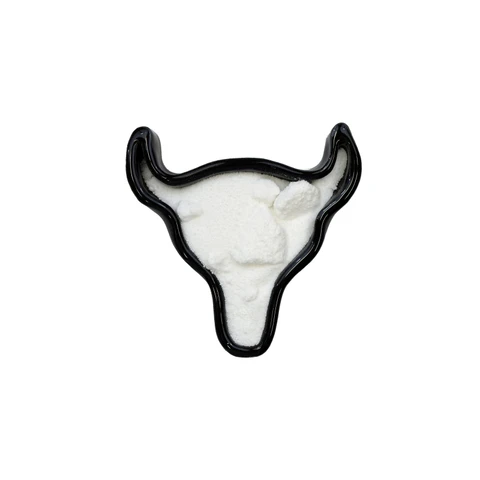
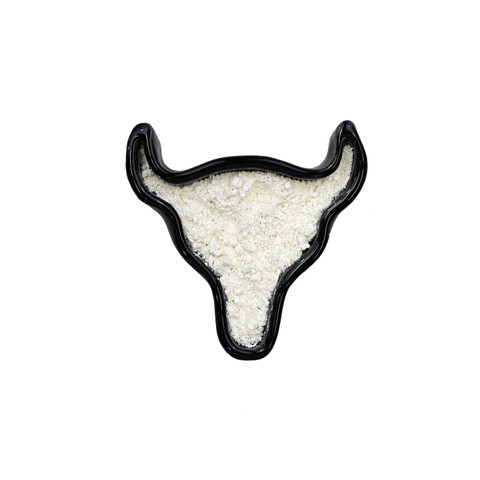

Alberta Slip ABSLIP Alberta Slip is an iron bearing slip clay that contains enough flux to melt into a glaze on its own at cone 10 but requires a boron-based flux to melt at cone 6. It is blended from several raw materials.
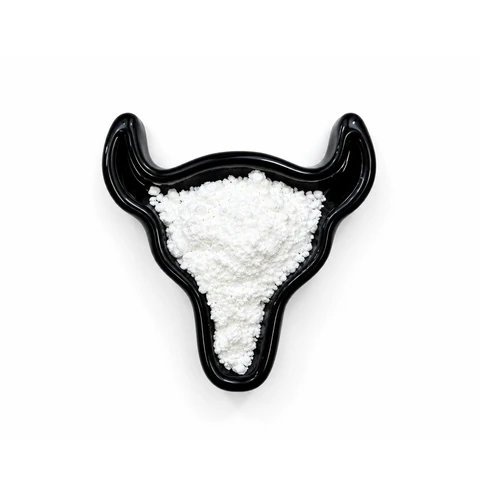
Ravenscrag Slip RAVSLIP Ravenscrag Slip is a light coloured silty clay with little iron, and at cone 10 it melts into a glaze with nothing added but water. It has decent plasticity on its own, but to be used in a glaze around 50% needs to be calcined. It is used in glazes but not intended for forming ware.
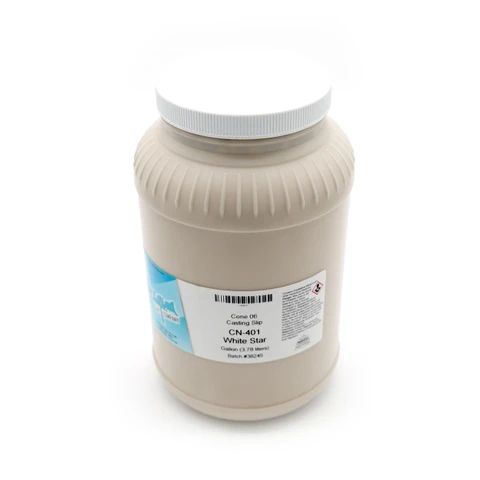
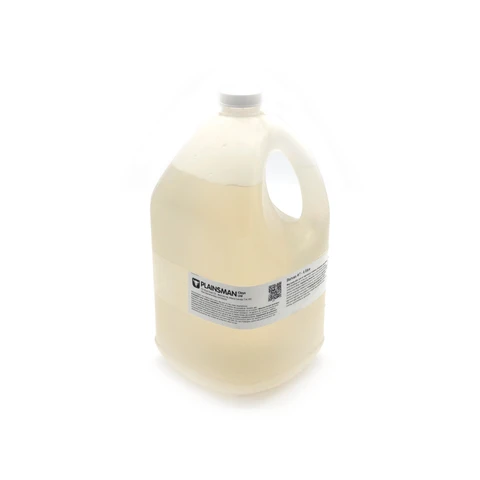
White Star Low Temp Slip SLIPWS White Star Casting Slip is a ready mixed white casting body for the low fire range, poured straight from the container into plaster moulds. It fires white and stays porous.
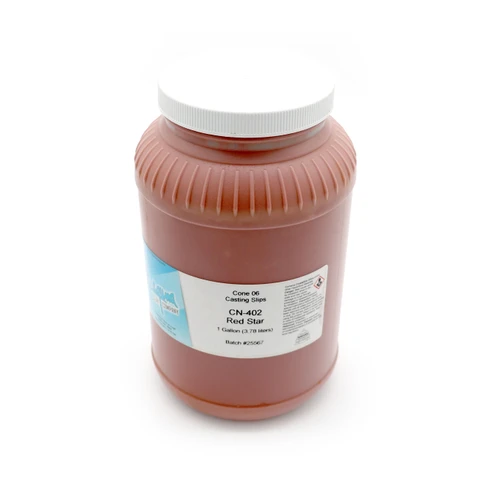
Red Star Low Temp Slip SLIPRS-1 Red Star Casting Slip is a ready mixed red casting body for the low fire range, poured straight from the container into plaster moulds. It fires white and stays porous.
Alumina Calcined ALCA Calcined alumina is aluminum oxide that has already been fired, so nothing in it burns off or shrinks in the kiln. It is used in kiln shelf and batt washes, as a placing powder under work that might stick, and as a way of adding alumina to a glaze.
Alumina Hydrate ALHY Alumina hydrate is aluminum hydroxide, the uncalcined form of alumina, and it still contains chemically bonded water. It is the alumina in most kiln wash and wadding recipes, the layer that stops ware and kiln furniture fusing to the shelf.
Barium Carbonate BACA Barium carbonate is the source of barium oxide in a glaze, and it is behind satin and dry matte surfaces and the copper turquoise called barium blue. In a clay body a small addition stops soluble salts scumming the surface as the ware dries and fires.
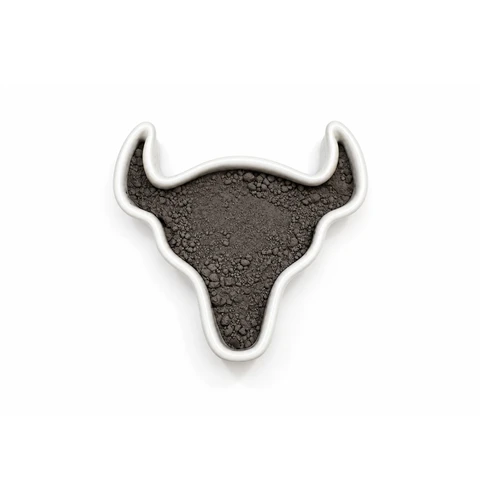
Barnard Slip Clay BASL Barnard Slip Substitute is a blended dark colourant, high in iron with a good share of manganese. It is a colourant and not a glaze on its own, so it is added to a recipe that supplies the melt.
Bentonite NS BENTNS Bentonite is a very fine clay formed from weathered volcanic ash, with particles about ten times smaller than kaolin. A very small addition makes a clay body noticeably more plastic.
Boric Acid BOAC Boric acid H₃BO₃ is a source of boron without potassium or sodium in it, unlike borax. It is mostly used for melting your own frit or low fire glaze base, not for adding to a glaze directly.
Bone Ash BOAS Bone ash is calcium phosphate and the material bone china is named for. A small addition to a glaze can give a milky blue white opalescence.
Borax Hydrous BOHY Borax hydrous is a water soluble source of boron, the oxide that gets low fire glazes melting as it functions as a strong low temperature flux. Because it dissolves, it is normally brushed on as a wash and not mixed into a glaze.
Calcined Kaolin CAKA Calcined kaolin is the anhydrous calcined form of the clay mineral kaolinite. It is kaolin that has been fired to drive off its chemically bonded water. It stands in for part of the raw kaolin in a glaze, slip or kiln wash and brings the same alumina and silica without the drying shrinkage.
Chrome Oxide CHOX Chrome oxide is a strong green colouring oxide for glazes and slips. A trace is enough to read as green, and it is also the raw material behind many commercial green and pink stains.
Cobalt Carbonate COCA Cobalt carbonate is the usual source of blue in pottery, and cobalt is the strongest of the colouring oxides, so a very small addition is enough. It colours glazes, slips, engobes and clay bodies.
Cobalt Oxide COOX Cobalt oxide is a black powder that fires blue, and it is the more concentrated of the two cobalt powders. It colours glazes, slips and clay bodies.
Copper Oxide Black COOXB Black copper oxide is the more concentrated of the two commonest copper additions, with more copper per gram than the carbonate. It colours glazes and slips.
Copper Oxide Red COOXR Red copper oxide is cuprous oxide, and it has more copper per gram than any other copper addition we stock. It colours glazes and slips like the other two copper additions.
Cornish Stone COST Cornish stone substitute is a blend of feldspar, quartz and kaolin used as a secondary flux in glazes, clay bodies and engobes. It melts at a higher temperature than feldspar, so it is not a one for one swap.
Cryolite CRYO Cryolite is sodium aluminium fluoride, an insoluble source of soda that melts at a very low temperature. It is used in glazes, frits and enamels in small additions.
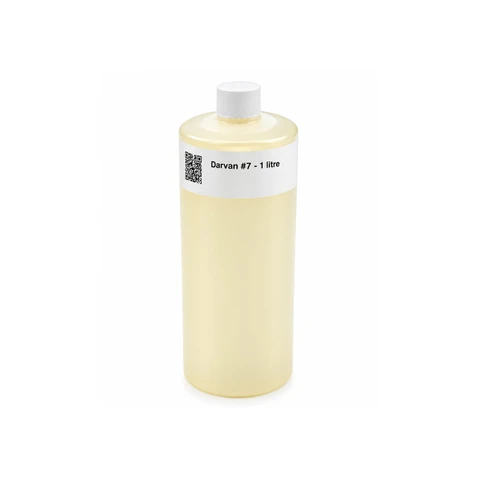
Darvan No. 7 DARV Darvan 7 is a deflocculant supplied ready mixed as a liquid, a solution of a sodium polymethacrylate polymer in water. It lets a casting slip hold a high load of solids and still pour.
Diamond Kaolin DIKA Diamond Kaolin is a secondary kaolin that gives a plastic body good dry strength. It fires light in colour and also works as a source of alumina and silica in glazes.
Dolomite DOLO Dolomite is a natural carbonate of calcium and magnesium, mined as rock and ground to a powder. It is one of the main sources of magnesia in a glaze, and it is the material behind the soft, silky surface of a dolomite matte.